Pristine Laser Restoration provides laser cleaning for fire and smoke damage remediation on metal surfaces, structural steel, wood beams, brick, and stone. We work as a specialty subcontractor alongside restoration companies, providing precision soot and char removal on surfaces where traditional methods create secondary damage or cannot reach the required level of clean. We coordinate with insurance adjusters and restoration project managers to document the scope, process, and results. We serve the four-state region of Missouri, Kansas, Oklahoma, and Arkansas.
Fire Destroyed It. Light Restores It.
Specialty laser cleaning for fire and smoke damage remediation. We work alongside restoration companies to remove soot, char, and smoke residue from structural steel, wood beams, brick, stone, and metal surfaces. No chemicals. No secondary mess. No additional moisture introduced to an already compromised structure.
BEFORE AND AFTER
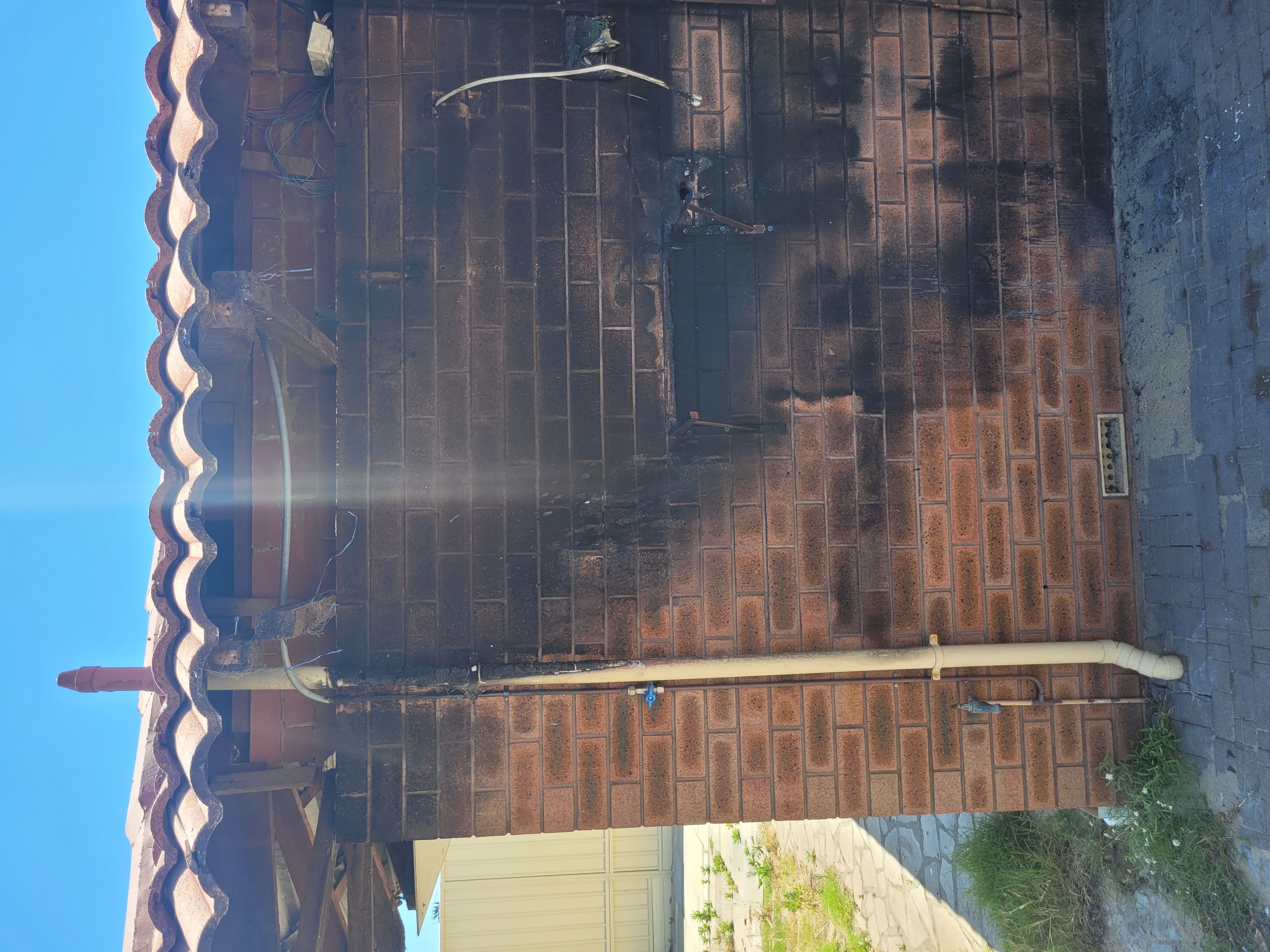 Before
 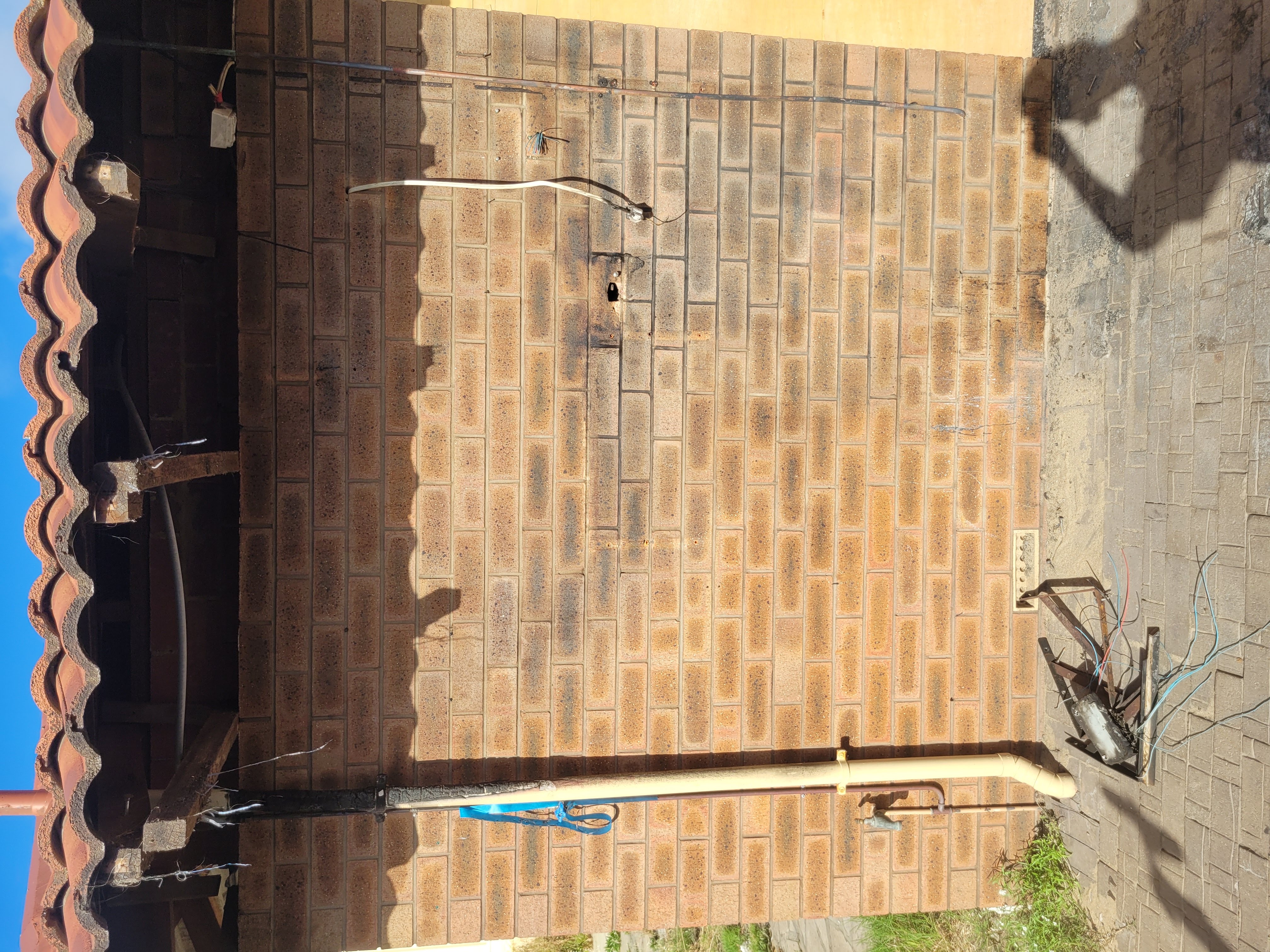 After
After Brick exterior. Heavy fire soot removed by laser. Original masonry surface restored to a documentable condition for insurance assessment.
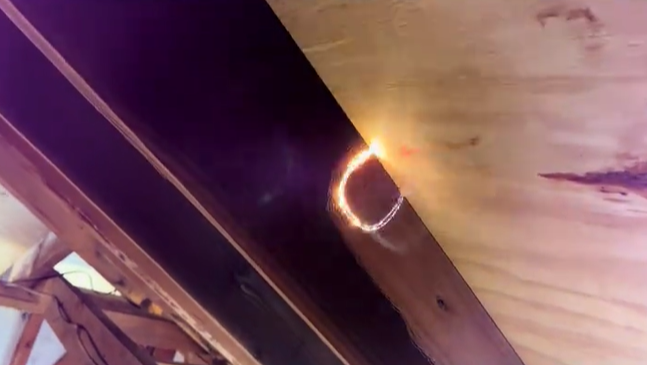
Laser cleaning in progress. Half of the brick wall cleaned, half still covered in soot. The contrast shows the precision of the process.
WHY RESTORATION TEAMS ADD LASER
A Precision Tool for the Surfaces That Need It Most
No Moisture Added
The process is completely dry. No water, no chemical solutions, no liquid introduced to a structure that has already been soaked by firefighting efforts. In a remediation environment, avoiding additional moisture prevents the conditions that lead to mold and secondary material degradation.
No Secondary Mess
No blast media to vacuum out of the space. No chemical residue to neutralize. No slurry of soot and cleaning solution on the floor. The laser vaporizes the contamination, the extractor captures it, and the surface is clean.
Preserves Original Material
Exposed timber beams, ornamental ironwork, historic masonry, and architectural details can be cleaned without altering the surface texture or character. For insurance documentation, the material is preserved in its original form with only the contamination removed.
Documentable Process
We document parameters, surfaces cleaned, and before and after conditions. This documentation integrates with your insurance claim file and supports the restoration scope of work.
Works Alongside Your Crew
We are a subcontractor, not a competitor. Your team manages the project. We show up when the schedule calls for laser cleaning, do the work, and clear out. We coordinate timing with your project manager.
Selective Cleaning
The laser targets specific surfaces and contamination types without affecting surrounding areas. In a fire-damaged space where some surfaces need aggressive remediation and others need delicate treatment, the laser parameters adjust for each situation without switching equipment or methods.
Restoration companies add laser cleaning to their fire remediation toolbox for surfaces where traditional methods create secondary problems or cannot reach the required level of clean. Soda blasting leaves alkaline residue that must be neutralized and creates particulate cleanup. Dry ice blasting requires ventilation monitoring for CO2 buildup and generates noise that disrupts adjacent work. Manual cleaning is labor-intensive and inconsistent on textured or porous surfaces. Laser cleaning eliminates these secondary issues. The process is dry, produces no blast media residue, and vaporizes soot at the surface without introducing moisture, chemicals, or abrasive impact to the structure. For restoration companies working with insurance adjusters, the laser process is documentable with specific parameters, surface-by-surface progress, and before and after conditions. This documentation supports the claim scope and demonstrates that each surface received treatment appropriate to its material and contamination level.
HOW IT COMPARES
The Cleaning Method Matters When the Structure Is Already Compromised
After a fire, the structure is weakened, saturated, and fragile in ways that are not always visible. The cleaning method you use on soot-covered surfaces needs to remove the contamination without introducing new problems to an already damaged property. Water adds moisture to materials that may already have water damage from firefighting. Chemicals leave residue in a space that will be occupied by people. Abrasive methods create dust and debris in an environment that is already contaminated.
We work as a specialty subcontractor alongside your restoration team. You manage the overall project. We handle the surfaces where precision cleaning produces a better result than traditional methods can deliver. If laser is the right tool for a specific surface, we tell you what it looks like. If the surface is better served by another method in your toolkit, we tell you that too.
Soda Blasting
What it does well:
Common choice for fire remediation. Sodium bicarbonate is relatively gentle, deodorizes while it cleans, and is widely available. For large surface areas where speed is the priority, soda blasting covers ground quickly.
Where it falls short:
Creates substantial cleanup after cleaning. Spent media and dislodged soot must be collected and removed. Sodium bicarbonate residue is alkaline and must be thoroughly neutralized before any coating. In enclosed spaces, fills the air with particulate requiring respiratory protection. On surfaces where original texture matters, abrasive impact can alter character.
Dry Ice Blasting
What it does well:
Dry ice sublimates on contact, leaving no secondary blast media to clean up. Significant advantage in fire remediation. Works well on soot, smoke residue, and light char.
Where it falls short:
Loud. Noise levels require hearing protection for everyone in the work zone. Creates CO2 buildup risk in enclosed spaces requiring ventilation monitoring. Dry ice pellets are a recurring consumable requiring specialized cold storage. On heavily bonded char, cleaning consistency can vary. Equipment footprint and operating requirements make it more expensive per square foot.
Manual Scrubbing and Chemical Cleaning
What it does well:
Most widely used method for soot remediation. Requires minimal equipment, no specialized training beyond standard remediation certification. For flat, accessible surfaces with light to moderate soot, manual cleaning gets the job done.
Where it falls short:
Labor-intensive and slow. Quality depends on the individual. Soot embeds in porous surfaces, and hand cleaning often removes the surface layer while leaving microscopic particles that continue producing odor. Chemicals can cause reactions with fire-damaged materials. On textured surfaces like exposed brick, carved stone, ornamental ironwork, and timber framing, manual cleaning cannot reach into surface texture.
Laser cleaning uses a fiber laser to vaporize soot, char, and smoke residue from fire-damaged surfaces. Soot is composed of fine carbon particles that absorb laser energy efficiently. When the laser beam contacts the soot layer, the carbon particles heat rapidly to their ablation threshold and vaporize. The base material underneath has a significantly higher ablation threshold and remains unaffected. An integrated fume extraction system captures the vaporized particles during cleaning. The process introduces no water, no chemicals, and no abrasive media to the already compromised structure. This matters in fire remediation because the building has often already sustained water damage from firefighting efforts, and adding moisture through the cleaning process creates conditions for mold growth and further material degradation. Laser cleaning works on structural steel, iron, aluminum, exposed wood beams, brick, stone, and concrete surfaces and is performed by trained operators using documented parameters for each material type.
Add Laser to Your Restoration Toolkit
If you are a restoration company, insurance adjuster, or property manager dealing with fire and smoke damage, send us the scope. Photos of the surfaces that need cleaning, the materials involved, and the timeline. We will tell you which surfaces benefit from laser and how we integrate with your project schedule.
RELATED SERVICES
Fire Damage Rarely Stops at Soot
Residential and Property
Smoke damage on residential surfaces, curb appeal restoration, and property cleanup. We work with property owners and realtors on surfaces that need more than a pressure wash.
Learn moreIndustrial Maintenance
Fire damage to production equipment, plant infrastructure, or facility surfaces? Same laser process, scaled for industrial operations.
Learn moreCOMMON QUESTIONS
What Restoration Professionals Ask About Laser
The Fire Already Did Enough Damage. The Cleanup Should Not Add More.
Send us the scope. Photos of the surfaces, the materials involved, and the project timeline. We will tell you which surfaces benefit from laser cleaning, how it fits your schedule, and what the work looks like. Restoration companies, insurance adjusters, and property managers welcome.