We are a woman-owned, veteran family-owned laser cleaning service based in Neosho, Missouri. Instead of sandblasting, bead blasting, wire wheeling, or chemicals, we use a fiber laser with integrated fume extraction to remove rust, coatings, mill scale, and contamination from steel beams, equipment, tooling, and weld areas. The laser removes the contamination without affecting the metal underneath or leaving behind waste to dispose of. We also prep surfaces to an inspection-ready finish for magnetic particle and dye penetrant testing. We serve manufacturing plants and industrial facilities across Missouri, Kansas, Oklahoma, and Arkansas.
Clean the Equipment. Keep Production Running.
Mobile laser cleaning for production equipment, tooling, weld prep surfaces, heat exchangers, and facility infrastructure. We bring the laser to your plant, work inside your maintenance window, and leave nothing behind to dispose of.
BEFORE AND AFTER
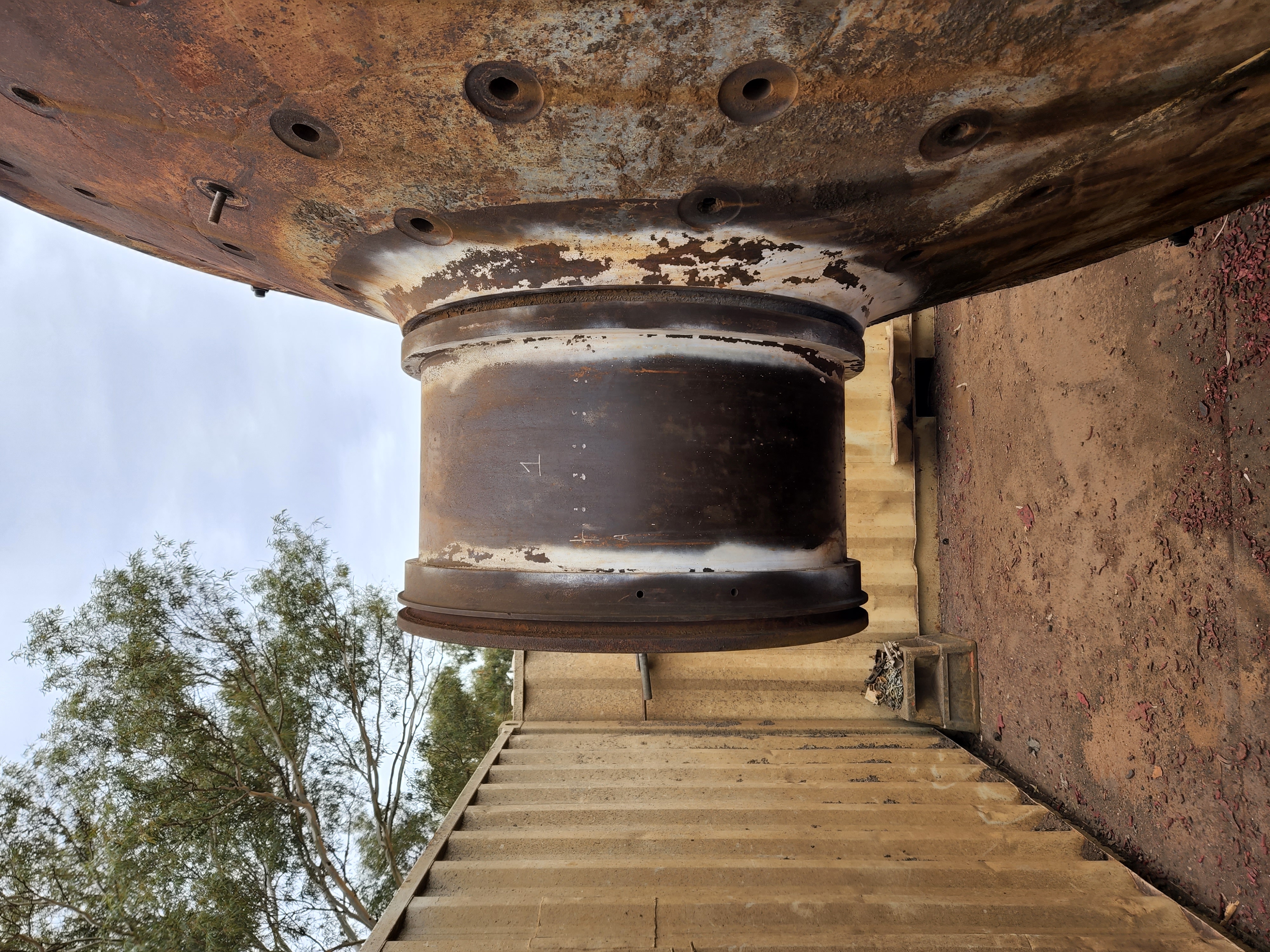 Before
 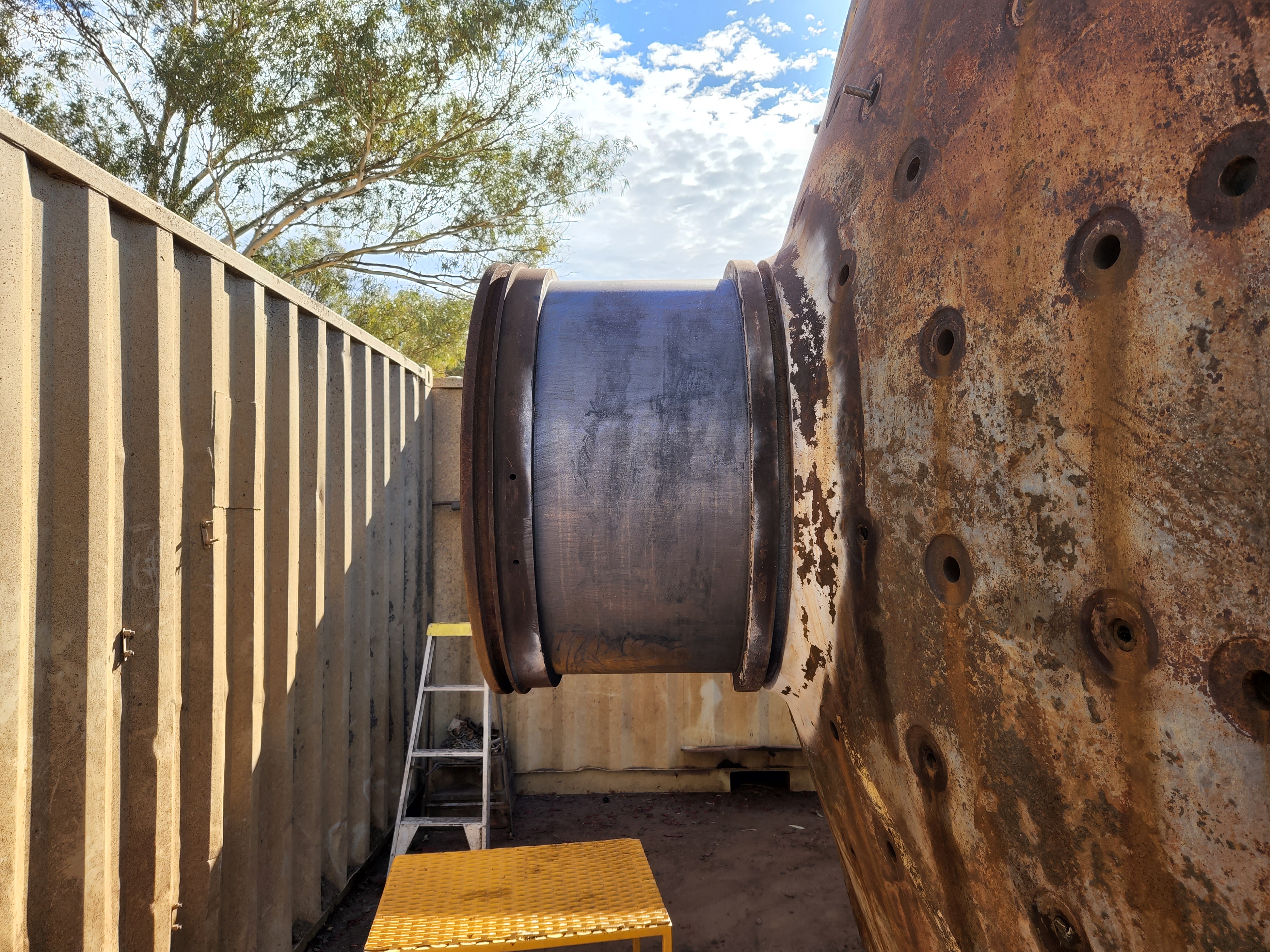 After
After Industrial trunnion. Heavy rust and scale removed. Original machined surface preserved.
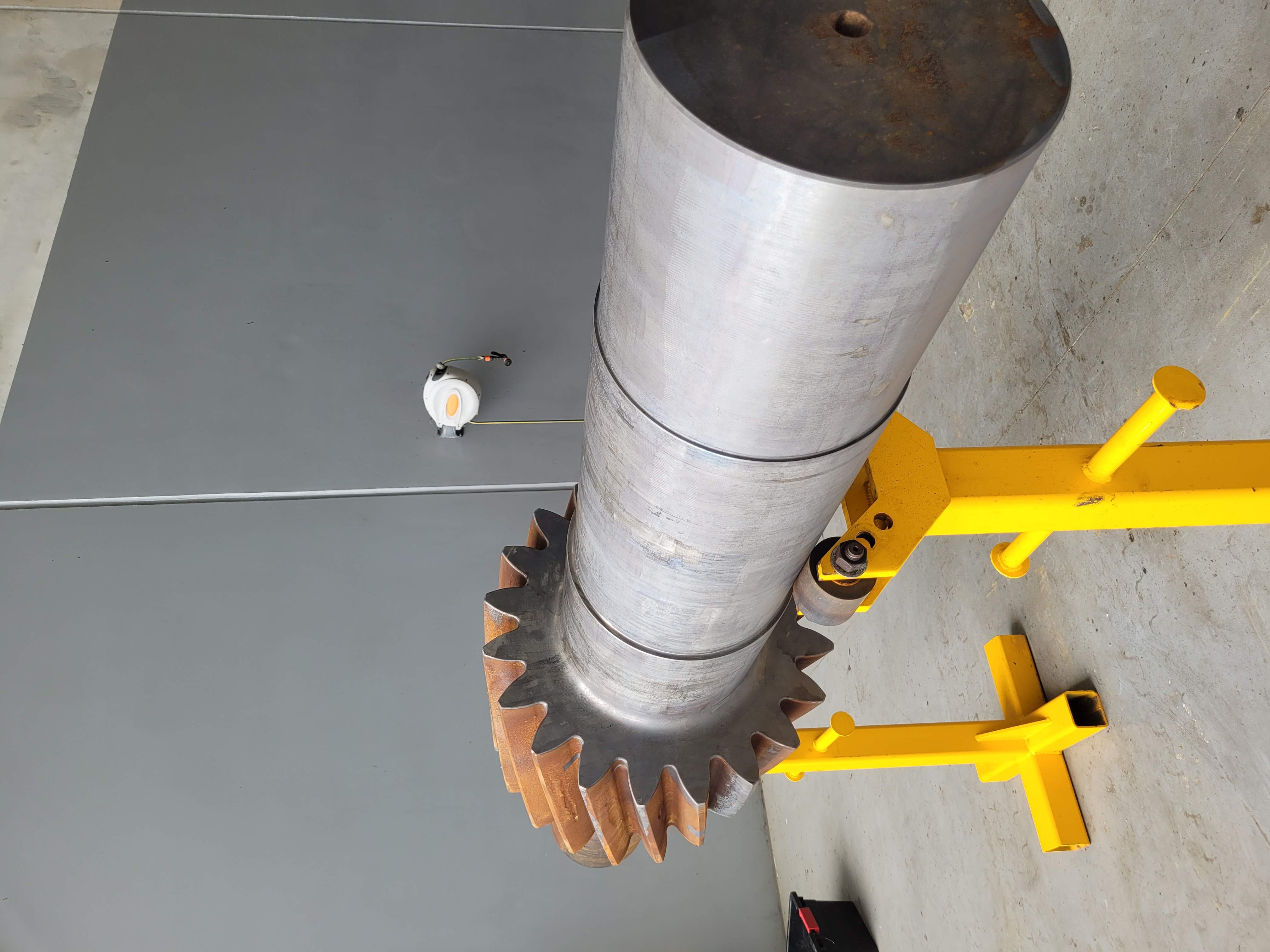 Before
 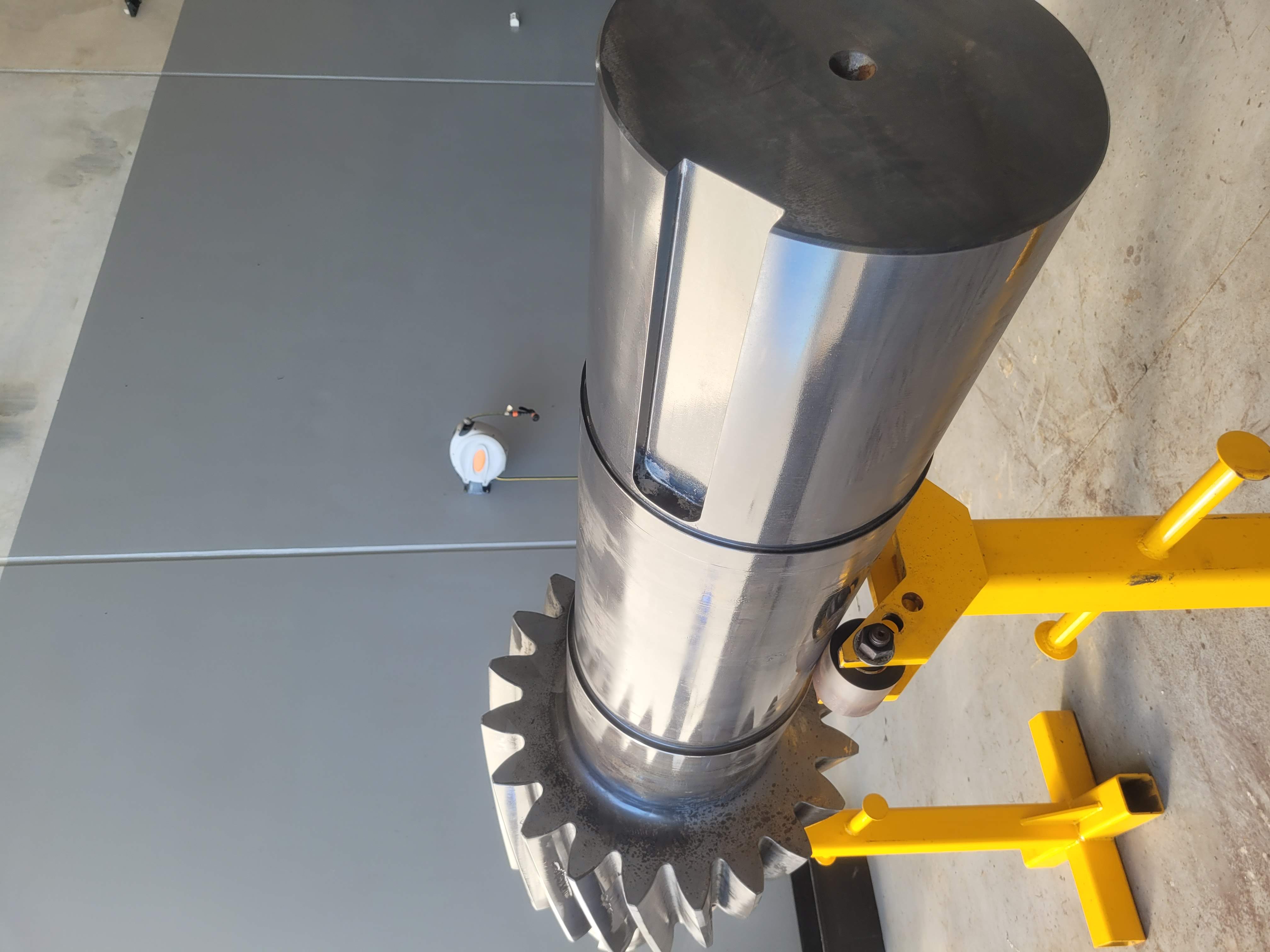 After
After Industrial pinion shaft. Rust and contamination removed. Original surface geometry and dimensions preserved.
WHY FACILITIES CHOOSE LASER
Clean Without Adding to Your Maintenance Burden
No Waste Disposal Logistics
The laser vaporizes contaminants. No abrasive media to contain and haul. No chemical drums to manifest. No disposal permitting. The compliance burden that comes with blasting and chemical cleaning does not apply.
Substrate Stays Intact
We adjust parameters for each material and test before proceeding. Machined surfaces, tooling, threaded connections, and bearing seats keep their dimensions. The laser removes what does not belong and leaves the rest alone.
Works Inside Your Maintenance Window
We bring self-contained equipment to your facility and work within your planned shutdown, turnaround, or changeover schedule. The goal is to fit cleaning into the time you already have, not create additional downtime.
One Process for Multiple Equipment Types
Steel, iron, aluminum, copper, brass, bronze, and concrete. Production equipment, structural steel, piping, heat exchangers, conveyor components, and facility infrastructure. One service for different cleaning needs across your operation.
Surface Ready for the Next Step
The cleaned surface is immediately ready for recoating, welding, inspection, or return to service. No intermediate rinse, etch, or dry time between cleaning and the next operation.
Reduced Safety and Compliance Overhead
No silica dust exposure monitoring. No CO2 buildup risk. No chemical handling training requirements. No hazardous waste storage. The safety profile of the process is simpler than the alternatives.
Laser cleaning eliminates the secondary costs that traditional cleaning methods add to a maintenance operation. Sandblasting requires abrasive media containment, silica dust monitoring, and waste disposal. Dry ice blasting demands specialized pellet storage, full PPE, and CO2 ventilation monitoring. Chemical cleaning carries hazardous waste manifesting, disposal permitting, and regulatory compliance overhead. Laser cleaning produces none of these requirements. The laser vaporizes contamination on contact, an integrated fume extraction system captures the particulate, and the cleaned surface is immediately ready for the next step. For manufacturing facilities managing planned shutdowns and turnaround schedules, this means less time spent on setup, containment, and cleanup around the actual cleaning work. The process works on production equipment, structural steel, piping, heat exchangers, and facility infrastructure without switching between different cleaning methods for different surface types.
HOW IT COMPARES
Every Cleaning Method Works. The Question Is What It Costs You Beyond the Cleaning.
Your maintenance team already has a process for cleaning equipment. Sandblasting crews come in during shutdowns. Dry ice contractors handle the sensitive components. Chemical soak tanks take care of the small parts. Each method removes contamination. But each method also adds something to your operation: waste disposal logistics, containment setup, compliance documentation, or equipment downtime beyond what the cleaning itself requires.
We evaluate each job on its own terms. When you send us photos, we look at the contamination type, the substrate material, the access constraints, and your maintenance schedule. We test a small area first and adjust parameters before proceeding. If laser is the right approach for the job, we tell you what it looks like. If it is not, we tell you that instead.
Sandblasting
What it does well:
Strips heavy coatings and thick corrosion quickly at relatively low equipment cost. For large surfaces where profile tolerance is wide, blasting is efficient and widely available.
Where it falls short:
Abrasive media embeds in surfaces and generates secondary waste requiring containment and disposal. Silica dust is a documented respiratory hazard. On machined surfaces, abrasive impact can alter critical tolerances.
Dry Ice Blasting
What it does well:
Dry ice sublimates on contact, leaving no secondary waste media. It works effectively on grease, oil, and softer contaminants where moisture and residue are concerns.
Where it falls short:
Generates significant noise requiring full PPE. In enclosed spaces, CO2 buildup risk requires ventilation monitoring. Dry ice storage demands specialized equipment, and pellets are a recurring consumable cost.
Chemical Degreasing
What it does well:
Excels at reaching complex internal geometries, passages, and recessed areas. For batch processing of small parts in tank operations, chemicals can be efficient at volume.
Where it falls short:
RCRA hazardous waste requirements, disposal permitting, manifesting, storage time limits, and environmental compliance audits create ongoing operational cost. Chemical soak times run hours to days.
Industrial laser cleaning uses a focused, fiber laser beam to remove rust, scale, paint, grease, and contamination from metal surfaces. The laser energy is tuned to the ablation threshold of the contaminant, the energy level where the unwanted material vaporizes. Because the base metal has a significantly higher ablation threshold, the laser removes the contamination layer without affecting the substrate underneath. The process produces no secondary waste media, requires no chemicals, and leaves no residue to dispose of. An integrated fume extraction system captures vaporized particles during cleaning. The operator adjusts laser parameters for each specific material and contamination type and tests a small area first to confirm settings before proceeding. This precision allows cleaning on machined surfaces, threaded connections, bearing seats, and other areas where dimensional accuracy matters and traditional abrasive or chemical methods create risk.
Your Equipment Deserves Better Than Downtime
Send us photos of what needs cleaning. Include the surface material, the type of contamination, and your maintenance schedule if you have one. We will tell you what the laser can do, what it cannot do, and what the job looks like.
RELATED SERVICES
Other Ways We Help Industrial Operations
NDT Surface Prep
Need surfaces cleaned for inspection? Laser cleaning vaporizes contaminants from within defects rather than smearing or masking them.
Learn moreRust Removal
Heavy corrosion on structural steel, piping, or equipment? Laser removes oxide layers down to clean metal without altering the surface profile.
Learn morePaint and Coatings
Old coatings that need to come off before recoating? Laser stripping removes paint, powder coat, and protective layers without fire risk or substrate damage.
Learn moreCOMMON QUESTIONS
What Facility Managers Ask Before Booking
Send Us Photos. Get a Real Answer.
Tell us what needs cleaning, what material it is, and when your next maintenance window opens. We will tell you exactly what the laser can do for your operation and what the job looks like.