Pristine Laser Restoration removes paint, powder coat, primer, epoxy, and protective coatings from steel, aluminum, cast iron, copper, brass, and iron surfaces using a fiber laser with integrated fume extraction. The laser vaporizes the coating down to bare metal without affecting the metal underneath, preserving original dimensions, surface finish, and material integrity. We serve industrial operations, automotive restorers, property owners, and contractors across Missouri, Kansas, Oklahoma, and Arkansas with mobile on-site service. We also accept shipped parts through our national ship-to program.
Strip the Coating. Save the Surface Underneath.
Laser coating removal strips paint, powder coat, primer, epoxy, and protective layers down to bare metal without grinding into the substrate, soaking it in chemicals, or heating it until something warps. Fume extraction captures particulate at the source. No hazardous waste drums to dispose of. Mobile service across Missouri, Kansas, Oklahoma, and Arkansas, plus a national ship-to program for parts and components.
BEFORE AND AFTER
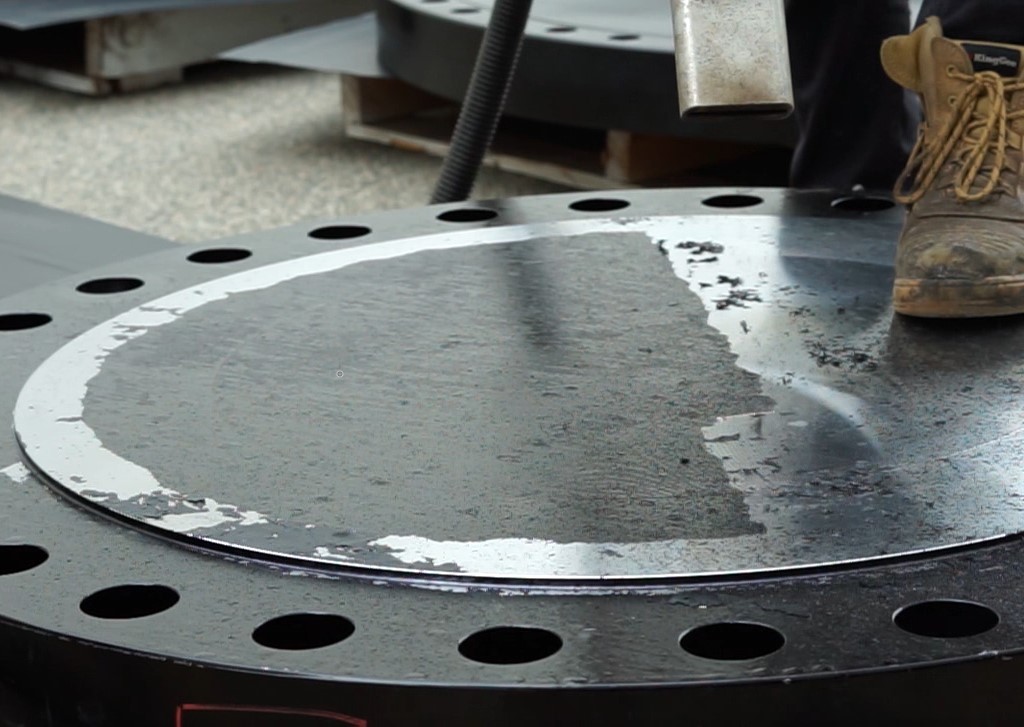
Industrial tooling. Coating removal in progress showing the laser cleaning transformation on a single part.
.jpg)
Paint removal by laser cleaning. Clean metal surface revealed without grinding marks, chemical residue, or heat distortion.
WHY PEOPLE CHOOSE LASER FOR COATING REMOVAL
Remove the Coating. Leave the Metal Exactly as It Was.
Substrate Stays Intact
The laser removes the coating without grinding into the metal surface underneath. Original dimensions, surface finish, and material properties are preserved. Machined surfaces, threads, and tight-tolerance features stay where they are.
No Fire or Heat Warping Risk
The pulsed laser delivers energy in controlled bursts that vaporize the coating without building up heat in the substrate. No open flame, no torch, no risk of warping thin panels or heat-treating changes to the base metal.
No Chemical Handling or Disposal
No methylene chloride, no caustic strippers, no soak tanks, no rinse water contamination, no hazardous waste drums. The coating is vaporized and captured by the integrated fume extraction system.
Hazardous Coatings Handled Safely
Lead paint, cadmium plating, chromate primers, and other hazardous coatings are vaporized and captured at the source by the fume extraction system rather than released as dust or dissolved into chemical waste streams.
Surface Ready for the Next Step
The cleaned surface is immediately ready for recoating, welding, bonding, or inspection. No intermediate rinse, neutralization, or dry time. No blast media embedded in the surface that could cause adhesion problems with the new coating.
Mobile and Ship-To Options
We bring the laser to your location across Missouri, Kansas, Oklahoma, and Arkansas for on-site coating removal. For parts and components, our national ship-to program accepts shipments from anywhere in the country.
Laser coating removal eliminates the secondary problems that chemical stripping and grinding create. Chemical strippers leave residue that must be rinsed and neutralized before the surface can be recoated, and the waste chemicals require hazardous material handling and disposal. Grinding removes base metal along with the coating, altering part dimensions and leaving scratch patterns that affect how the next coating adheres. Heat-based methods risk warping thin substrates and changing the metallurgical properties of heat-treated metals. Laser removal avoids all of these issues. The coating is vaporized on contact, the fume extraction system captures the particulate, and the bare metal surface is immediately ready for the next step without intermediate cleaning, rinsing, or surface correction. For automotive restorers, industrial maintenance teams, and contractors working with coated metal surfaces, this means less time between stripping and recoating, and a cleaner surface to start with.
HOW IT COMPARES
Coating Removal Is Not Just About Getting the Paint Off. It Is About What the Surface Looks Like When You Are Done.
The real question with coating removal is not whether the paint comes off. Any method will get paint off eventually. The question is what happens to the metal underneath. Grinding leaves scratches and removes base material. Chemical strippers leave residue that can interfere with the next coating. Heat guns and torches risk warping thin panels and changing the temper of heat-treated metals. Each method removes the coating but adds something else you have to deal with before the surface is actually ready.
We evaluate each job on its own terms. When you send us photos, we look at the coating type, the substrate material, the part geometry, and what the surface needs to be ready for after stripping. We test a small area first and adjust parameters before proceeding. If laser is the right approach for the job, we tell you what it looks like. If it is not, we tell you that instead.
Chemical Strippers
What it does well:
Reaches complex geometries and recessed areas that are difficult to access with line-of-sight methods. For batch processing of small parts, chemical soak tanks can handle volume efficiently.
Where it falls short:
Soak times measured in hours to days. Chemical residue requires thorough rinsing and neutralization before recoating. Hazardous waste disposal, storage, and manifesting add ongoing operational cost and compliance burden.
Heat Guns
What it does well:
Low equipment cost and widely available. Effective for softening thick paint layers on flat, accessible surfaces where heat sensitivity is not a concern.
Where it falls short:
Risk of warping thin panels and altering heat-treated metal properties. Open flame and high heat create fire risk. Releases toxic fumes from heated coatings, especially lead paint. Slow on large or multi-layer surfaces.
Grinding
What it does well:
Fast material removal on flat surfaces. Low equipment cost and no specialized training required. Widely available and effective for rough surface preparation where profile tolerance is not critical.
Where it falls short:
Removes base metal along with the coating, altering dimensions and surface finish. Leaves scratch patterns that can affect coating adhesion. Generates dust and sparks. Cannot reach recessed areas or complex geometries without risk of gouging.
Laser coating removal uses a fiber laser to vaporize paint, powder coat, primer, epoxy, and protective coatings from metal surfaces. The laser energy is tuned to the ablation threshold of the coating material, which is the energy level where the coating vaporizes. Because the base metal has a significantly higher ablation threshold, the laser removes the coating layer without affecting the substrate underneath. The process is non-contact, meaning nothing touches the surface except light energy. An integrated fume extraction system captures vaporized coating particles during removal. The operator adjusts laser parameters for each specific coating type and substrate combination and tests a small area first to confirm settings before proceeding. This precision allows coating removal from machined surfaces, thin sheet metal, heat-treated components, and other substrates where grinding, chemical stripping, or heat-based methods create risk of damage.
The Coating Comes Off. The Metal Stays Intact.
Send us photos of what needs stripping. Include the coating type if you know it, the substrate material, and what the surface needs to be ready for after removal. We will tell you what the laser can do, what it will look like, and what the job costs.
RELATED SERVICES
Coating Removal Is Usually the First Step
Auto Restoration
Stripping paint, primer, and body filler from classic car parts? Laser removes coatings from panels, frames, and components without warping metal or embedding media in the surface.
Learn moreIndustrial Maintenance
Production equipment with failed coatings, corrosion under paint, or surfaces that need recoating? We bring the laser to your facility and work within your maintenance schedule.
Learn moreRust Removal
Corrosion underneath the coating? Once the paint comes off, we can remove the rust from the same surface in the same visit without switching equipment or methods.
Learn moreCOMMON QUESTIONS
What People Ask Before Sending Us Their Coated Parts
Send Us Your Coated Parts. Get a Straight Answer.
Tell us what coating needs to come off, what metal is underneath, and what the surface needs to be ready for. We will tell you whether the laser is the right method, what the job looks like, and what it costs.